The $29 Unfair Advantage in Your Job Search
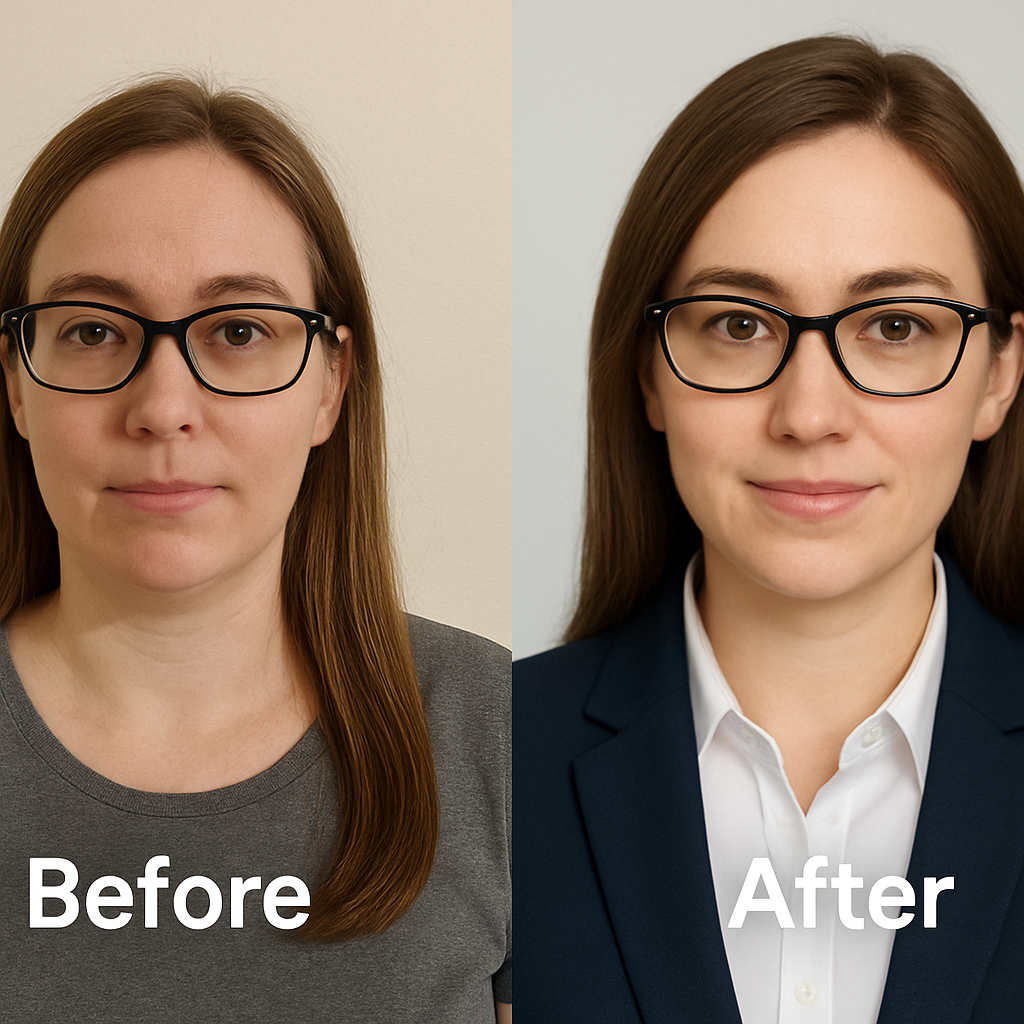
The job market of 2026 operates on a fundamental paradox. While job postings remain abundant on paper, the friction involved in actually securing an interview has reached unprecedented levels. We are witnessing a structural overload where technology has made applying infinitely easier, yet getting noticed has become exponentially harder.
To navigate this, you need to treat your professional profile like a product. In this environment, NovaHeadshot is not just a photo tool; it is a critical piece of your modern career tech stack. It solves the "trust gap" that exists between you and a hiring manager before they ever read a single bullet point on your resume. You need to stop optimizing for volume and start optimizing for conversion.
The data supports this shift in strategy. When you see how our platform works, you realize that we are solving a specific bottleneck in the recruitment funnel: the visual first impression. In a market where recruiters scan profiles in seconds, your visual identity is the highest-leverage asset you have.
The Funnel Problem: Why "Qualified" Is No Longer Enough
In 2026, the recruitment funnel is broken at the top. The ease of AI-assisted applications has created a noise-to-signal ratio that makes it nearly impossible for recruiters to evaluate candidates on merit alone.
According to recent data, LinkedIn now processes an average of 11,000 job applications per minute. This 45% year-over-year increase is not driven by more candidates, but by automation. The result is that the average job posting now attracts 242 applications.
For the applicant, this creates a terrifying reality:
- The Attention Deficit: Recruiters cannot read 242 resumes. They filter aggressively.
- The Rejection Velocity: Hiring managers reject obvious mismatches in seconds.
- The Discovery Problem: Even top-tier candidates get buried in the stack simply because they didn't catch the recruiter's eye in the first 30 seconds.
This is not a meritocracy. It is an attention economy. If you cannot capture attention in the first scan, your qualifications do not matter because they will never be seen.
The Psychology of the 100-Millisecond Judgment
We often like to believe that hiring decisions are logical and data-driven. The research tells a different story. Humans are biological machines optimized for rapid pattern recognition.
Research from Princeton University reveals that trait assessments based on facial appearance occur within 100 milliseconds. In one-tenth of a second, a recruiter has already formed a subconscious opinion about your competence, likability, and trustworthiness.
This snap judgment is sticky. Once formed, it acts as a filter through which all subsequent information is viewed. If the visual signal is "unprofessional," your resume is read with skepticism. If the signal is "competent," your resume is read with confirmation bias.
The ROI of Visual Credibility
The impact of this psychological mechanism is quantifiable. Profiles with professional headshots perform significantly better across every key metric of the job search funnel:
- 14x More Visibility: Profiles with professional photos receive 14 times more views than those without.
- 36x More Engagement: Candidates with professional imagery receive 36 times more messages from recruiters.
- Higher Perceived Competence: In controlled studies, professional headshots resulted in a 76% increase in perceived competence.
This is the definition of an unfair advantage. For a minimal investment, you are drastically increasing the conversion rate at the very top of your funnel.
The Volume Trap vs. The Precision Strategy
Most candidates react to the noisy market by adding more noise. They use AI to blast out 200 applications a week. This is a losing strategy.
Data from 2025 indicates that cold online applications result in a success rate of only 0.1% to 2%. You would need to submit up to 200 applications just to generate a single offer. This approach leads to burnout, not employment.
The Ghost Job Economy
Furthermore, you are often applying to roles that do not exist. Analysis shows that nearly 1 in 3 job postings are "ghost jobs" that never result in a hire.
Instead of playing the volume lottery, you need a precision strategy. You need to signal to the market that you are a premium candidate. A high-quality visual identity is the fastest way to send that signal. It tells the recruiter: "I understand professional norms. I pay attention to detail. I am a safe bet to put in front of a client."
The "Paper" Resume Is Dead
In an era where generative AI can write a perfect cover letter in seconds, text has lost its ability to differentiate. "Paper" qualifications are now a commodity.
What cannot be easily faked or automated by a text generator is your physical presence and digital identity. As we move deeper into 2026, recruiters are relying more heavily on visual and contextual cues to verify that a candidate is real and credible.
Your LinkedIn profile is no longer just a digital resume; it is a landing page. And like any high-converting landing page, the hero image is the most critical element. It occupies 19% of a recruiter's attention during their initial scan.
If you are using a cropped wedding photo, a blurry selfie, or an avatar, you are introducing friction. You are forcing the recruiter to do extra mental work to imagine you in the role. NovaHeadshot removes that friction. By presenting a studio-quality image, you align your visual brand with the level of the role you are targeting.
The Cost of Professionalism: Breaking the Barrier
Historically, access to this "unfair advantage" was gatekept by price. A traditional studio headshot session in a major market like New York or London costs between $295 and $450.
This price tag created a disparity. Executives and well-funded candidates could afford to signal competence. Entry-level talent, or those currently out of work, were left with selfies.
The $29 Solution
This is where the market has shifted. NovaHeadshot utilizes advanced AI to democratize access to this signal. We have brought the cost of a professional studio session down to $29.
This is not about generating cartoons or avatars. It is about photorealism. Our platform allows you to upload everyday selfies and receive a portfolio of studio-quality headshots that are indistinguishable from traditional photography.
Here is why this matters for your strategy:
- Speed: You get results in minutes, not weeks. You can upgrade your LinkedIn profile today, Wednesday, February 18, 2026, instantly improving your visibility.
- Variety: You aren't stuck with one "corporate" look. You can generate styles that fit your specific industry, whether that is a creative agency or a law firm.
- Rights: You own the commercial rights, allowing you to use these images across your entire digital footprint.
Why This Matters Right Now
The hiring landscape is shifting under our feet. 74% of companies plan to increase their use of AI in hiring over the next 12 months. We are entering a phase of the labor market where algorithms are the first gatekeepers.
These systems, and the humans who manage them, are looking for consistency. They want to see a candidate who looks the part.
Research from 2026 shows that 70% of professionals are already using AI tools in their job search. If you are not leveraging technology to optimize your presentation, you are falling behind the baseline. The standard for "professional presence" has risen.
"You don't need more noise. You need sharper signal. You don't have to be slightly better than 200 people. You need to be the obvious choice for 5–10 roles."
Implementation: The Signal Loop
To turn this insight into a tactical advantage, you need to implement a "Signal Loop." This is a cyclical process of upgrading your visual assets to drive higher engagement, which leads to better opportunities.
Step 1: Generate High-Fidelity Assets
Go to the NovaHeadshot app and upload your baseline photos. Choose a style that matches your target role. If you are aiming for a Director level position, choose a confident, authoritative style. If you are in sales, choose an approachable, warm style.
Step 2: The LinkedIn Overhaul
Replace your profile photo immediately. But do not stop there. Ensure your background banner complements the color palette of your new headshot. Visual consistency signals high executive function.
Step 3: Cross-Platform Consistency
Update your Slack profile, your Zoom avatar, your email signature, and your personal portfolio. When a recruiter clicks from your resume to your website, they should see the same person. This repetition builds trust.
Step 4: Measured Outreach
Once your visual signal is optimized, shift your strategy from mass applying to targeted networking. Reach out to hiring managers directly. When your message pops up in their inbox, your thumbnail image will be the first thing they see. A professional image increases the likelihood of a reply.
From Invisible to Irresistible
The job market of 2026 is brutal for the unprepared, but it is highly navigable for the strategic. The days of relying solely on your text resume are over. You are competing in a visual, attention-scarce marketplace.
The gap between "qualified" and "hired" is often just a matter of perception. By investing in a professional visual identity, you are taking control of that perception. You are moving yourself from the "maybe" pile to the "must interview" list.
You have control over very few variables in this process. You cannot control the economy. You cannot control the ATS algorithms. But you can control how you show up.
For the price of a casual lunch, you can upgrade the single most important visual asset in your career toolkit. Do not let a bad photo be the reason you missed your next big opportunity.
Build your professional signal today.
Ready to Create Your Professional Headshots?
Transform your selfies into professional headshots in under 20 minutes. Join thousands of professionals who trust Nova Headshot for their AI-generated headshots.