The Hidden Cost of 'Free' AI Headshot Generators
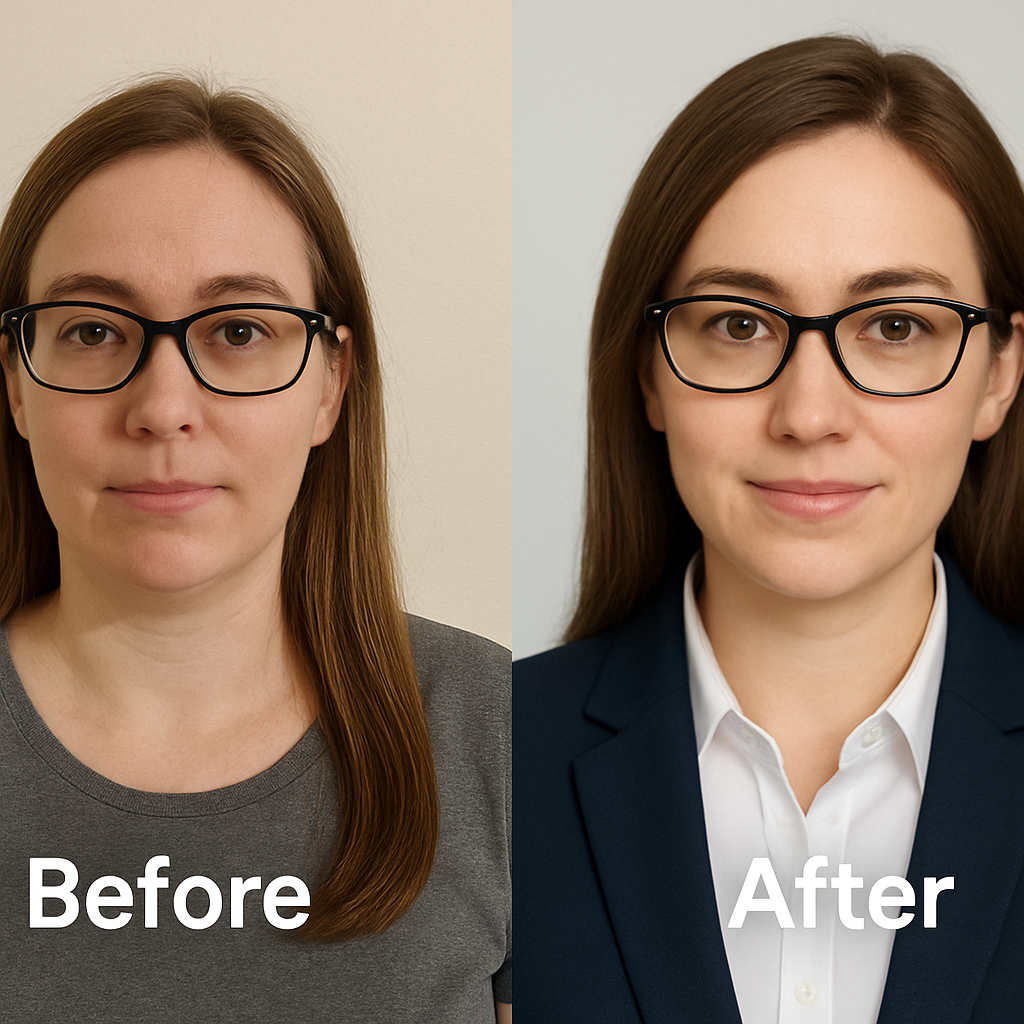
Free AI headshot tools look tempting. The value proposition seems obvious. You need a photo for LinkedIn or a resume, and you do not want to pay a photographer hundreds of dollars. You type "free AI headshot generator" into your browser, upload a selfie, and wait for the result.
However, in the world of generative AI, "free" is rarely actually free. It usually means the cost has simply been shifted to a different part of the value chain. You might not pay with a credit card, but you pay in time, data privacy, or professional credibility.
In 2026, the market is flooded with these tools. Some offer generous free tiers while others, like our platform NovaHeadshot, focus exclusively on professional-grade realism for a one-time price. To understand why a paid model exists in a sea of free alternatives, you have to look at the unit economics of AI generation. High-quality models are expensive to run. If a platform is giving you images for free, they are cutting corners on the model quality, the resolution, or the security of your biometric data.
This article breaks down the specific, quantifiable costs of using free AI generators. We will explore the technical limitations of free-tier models, the privacy risks of indefinite data retention, and the ROI of investing in your professional image. If you are ready to skip the trial-and-error, you can generate professional headshots instantly with our studio-grade platform.
1. The Quality Gap: Why "Free" Models Struggle with Realism
The primary constraint for any AI service is compute cost. Generating a high-fidelity image using a state-of-the-art diffusion model requires significant GPU power. To offer a service for free, providers must reduce this compute load. They do this by using older, lighter models or by aggressively compressing the output.
Resolution and Artifacts
The most immediate difference is resolution. Data from 2025 indicates that free tiers typically cap output resolution between 512x512 and 1024x1024 pixels. While this might look acceptable on a small phone screen, it falls apart on a desktop monitor.
In contrast, premium services standardly deliver 2048x2048 or 4K resolution. When you upload a low-resolution image to a company website or a conference brochure, the pixelation signals a lack of professional polish.
Free tools also struggle with what we call the "consistency problem." Independent analysis grades premium services like Headshots.com as "Grade A" for hyper-realism, while free tools often receive grades as low as "D-" due to visible artifacts. These artifacts include:
- Plastic Skin Texture: To mask noise, free models over-smooth skin, removing natural pores and micro-textures. The result looks waxy or synthetic.
- Asymmetrical Features: Free models frequently fail to align pupils or render symmetrical ears.
- The "Cut-and-Paste" Look: Lower-tier AI often struggles to blend the subject into the new background naturally, leaving a visible halo around the hair or shoulders.
The Bias of Training Data
There is a deeper technical issue regarding the datasets used to train free models. Research published in Psychological Science notes that AI-generated faces can appear "hyper-real," but this quality degrades significantly based on the training data balance.
Free models are often trained on older, public datasets that lack diversity. This leads to higher failure rates for non-white faces and a tendency to homogenize distinct facial features into a generic "statistically average" face. A professional service invests in fine-tuning models to preserve your specific identity, regardless of your ethnicity or facial structure.
When you use a free tool, you are often rolling the dice against a model that has not been optimized for your specific demographic.
2. The Time Cost: The "Free" Loophole
We often undervalue our time when evaluating software tools. On paper, a free generator seems like the fastest option. You upload, you wait a few seconds, and you are done. In reality, the workflow is rarely linear.
The Iteration Trap
Because the quality yield of free tools is low, users rarely get a usable image on the first try. The typical user journey involves:
- Creating accounts on 3 to 5 different platforms.
- Uploading photos and realizing the output looks like a caricature.
- Tweaking prompts or uploading new selfies.
- Waiting in low-priority processing queues.
Reports indicate that while a single generation might take seconds, the cumulative time to get a usable professional photo from free tools averages between 1 and 3 hours.
Queue Prioritization
Free users are second-class citizens in the server queue. During peak hours, free services often deprioritize non-paying traffic, leading to wait times that can stretch to 24-48 hours.
Compare this to the paid infrastructure of NovaHeadshot. By charging a transparent fee, we can afford dedicated GPU clusters that guarantee results. Our users typically receive a full gallery of studio-quality variations in 10 to 20 minutes.
If your hourly rate is $50, spending three hours fighting with free tools effectively costs you $150. Paying a fraction of that for a guaranteed 20-minute turnaround is simply better math.
"Time is the only asset you cannot recover. Spending hours to save $29 is a negative ROI activity for any professional."
3. The Privacy Cost: Your Face as the Product
The most insidious cost of free AI is data privacy. If a company is burning cash to generate images for you without charging, they are monetizing something else. Usually, that something is your biometric data.
Indefinite Retention Rights
When you agree to the Terms of Service for many free generators, you are often granting the company a "perpetual, irrevocable, transferable" license to your images. This means they can:
- Store your facial data indefinitely.
- Use your photos to train future AI models.
- Sell your data to third-party advertisers or data brokers.
This is not a theoretical risk. In the past few years, we have seen massive biometric data breaches. The 2023 breach of ClearID exposed 10 million facial recognition templates, and the Biostar 2 breach compromised over 28 million records. Unlike a password, you cannot reset your face if your biometric data is stolen.
The Danger of Third-Party Clouds
Free tools often rely on the cheapest possible cloud storage, which may not adhere to strict enterprise security standards. Your photos might be sitting in an unsecured S3 bucket, accessible to anyone with the right script.
At NovaHeadshot, our business model is simple. You pay us for photos, and we provide photos. We are not in the business of data monetization. We employ strict data governance policies where you retain the rights to your likeness. We do not use your private uploads to train public models, and we delete data according to strict retention schedules.
For professionals in law, finance, healthcare, or government, using a free AI tool is a compliance risk. The security of your biometric identity is worth more than the price of a lunch.
4. The Credibility Cost: The Uncanny Valley
A headshot serves a singular purpose. It establishes trust before you walk into the room.
Recruiters and clients in 2026 are sophisticated. They have seen thousands of AI-generated images. They can spot the "uncanny valley" effect—that subtle sense of unease when a face looks 99% human but 1% artificial.
The Signals of Artificiality
Free AI tools tend to produce images that are "too perfect." They remove all micro-asymmetries and skin irregularities. While this might sound flattering, it actually triggers distrust. A study on AI realism suggests that people rely on small imperfections to gauge authenticity. When those are stripped away, the viewer subconsciously registers the image as fake.
Furthermore, if your headshot looks 10% to 20% different from your real-life appearance, you create a "misalignment gap." This happens frequently with free tools that warp facial structure to fit a pre-set mold. When you show up for a video interview or a coffee meeting, the first thing the other person thinks is, "You don't look like your photo."
That split-second disconnect undermines your credibility. You want your headshot to look like the best version of you, not a generic avatar that vaguely resembles you.
Professional Standards vs. Social Media
What works for Instagram does not work for LinkedIn. Stylized, artistic, or "anime-style" portraits are fun, but they signal poor judgment in a corporate context. Free tools often default to these stylized looks because they are easier to generate than photorealism.
NovaHeadshot is engineered specifically for corporate and professional contexts. We focus on realistic lighting, professional attire (blazers, suits, smart casual), and neutral backgrounds. The goal is for a recruiter to look at your photo and simply think, "That is a professional candidate," not "That is a cool AI image."
5. The Opportunity Cost: The ROI of a First Impression
Let us look at the financial implications of your headshot. Your LinkedIn profile is your digital storefront.
Data from LinkedIn confirms that profiles with professional photos receive 14 times more profile views than those without. Furthermore, candidates with strong photos receive 36 times more messages from recruiters.
The Recruiter's Eye
Recruiters spend approximately 19% of the total time they view your profile looking at your photo. It is the visual anchor. If that photo is pixelated, clearly fake, or unprofessional, you are filtering yourself out of the hiring pool before they even read your experience.
A staggering 71% of recruiters admit they have rejected qualified candidates based solely on their LinkedIn profile picture.
The Cost Comparison
Let us analyze the investment required to solve this problem:
- Traditional Photography: A professional studio session averages between $283 and $500+. This delivers the highest quality but requires travel, scheduling, and hundreds of dollars.
- Paid AI Headshots: Services like NovaHeadshot cost between $29 and $70. This provides 40 to 100+ high-resolution, commercially licensed images.
- Free AI Generators: Cost $0 upfront but incur hours of time and potential reputation damage.
If a professional headshot helps you land a job with a salary that is $5,000 higher, or secures a consulting contract worth $2,000, the ROI on a $29 investment is astronomical. Conversely, the "opportunity cost" of saving that $29 could be a missed career-defining opportunity.
Using a free tool is stepping over dollars to pick up pennies.
6. So When Does "Free" Make Sense?
It is important to be intellectually honest. Free AI tools are not evil; they are just tools with specific limitations. There are scenarios where using a free generator is the rational choice.
Valid Use Cases for Free Tools
- Testing the Tech: If you have never used generative AI and just want to see how the technology works, free tools like Snapbar are a great sandbox.
- Social Media Avatars: For a Reddit profile, a Discord avatar, or a casual Instagram post, high-fidelity realism is not required. A stylized or slightly cartoonish result is perfectly acceptable.
- Anonymous Profiles: If you are building an online persona that does not need to be tied to your real-world professional identity, the "uncanny valley" issues matter less.
When to Pay
However, the calculus changes the moment professional stakes are involved. You should choose a paid, professional service when:
- You are updating your LinkedIn profile or resume.
- You are being featured on a company "About Us" page.
- You are speaking at a conference or being quoted in the press.
- You care about data privacy and the security of your biometrics.
- You value your time at more than $10 an hour.
7. Why NovaHeadshot Skips the "Free" Gimmick
At NovaHeadshot, we made a deliberate decision not to offer a free tier. This choice is rooted in our product philosophy and our commitment to the customer.
Building a system that delivers Grade A realism requires expensive infrastructure. We use advanced GPU clusters and license premium foundation models to ensure that when you upload your photos, the results respect your facial structure and skin tone. We cannot deliver that level of computing power for free without selling your data or compromising on quality.
Our focus is on speed and certainty. We know that when you need a headshot, you usually need it now. You do not want to prompt-engineer or wait in a 24-hour queue. You want to upload your selfies and get a gallery of usable, professional options in under 20 minutes.
We also prioritize transparency. By charging a fair price upfront, we align our incentives with yours. You are the customer, not the product. We succeed only when you are happy enough with your photos to recommend us to a colleague.
Building Your Modern Professional Toolkit
The allure of "free" is powerful, but in the professional world, you usually get what you pay for. A headshot is more than just a file on a hard drive. It is a digital asset that works for you 24/7, representing your brand to recruiters, clients, and investors while you sleep.
The hidden costs of free generators—poor resolution, wasted time, privacy risks, and credibility damage—far outweigh the small price of a premium service.
In the modern career stack, a high-quality headshot is a fundamental tool. You would not attend a job interview in a suit that fits poorly just because it was free. You should not treat your digital first impression with any less care.
Control your narrative. Protect your privacy. Invest in a result that actually looks like the professional you are.
Get Studio-Quality Headshots Today 👉 Start Your NovaHeadshot Session
Ready to Create Your Professional Headshots?
Transform your selfies into professional headshots in under 20 minutes. Join thousands of professionals who trust Nova Headshot for their AI-generated headshots.