5 Actionable Steps to Build a Powerful Personal Brand Online (in 2026)
The career playbook has fundamentally shifted. For decades, the resume was the primary currency of professional value. You optimized a static document, sent it into a black box, and hoped for a response. In 2026, that model is obsolete. The market has moved to a dynamic, always-on reputation system where your online presence speaks before you ever enter the room.
Data supports this shift. Recent studies indicate that 50% of American professionals believe a strong personal brand matters more than a strong resume, a sentiment that jumps to 61% among business executives. Your digital footprint is no longer just a portfolio. It is a signal of trustworthiness, competence, and relevance.
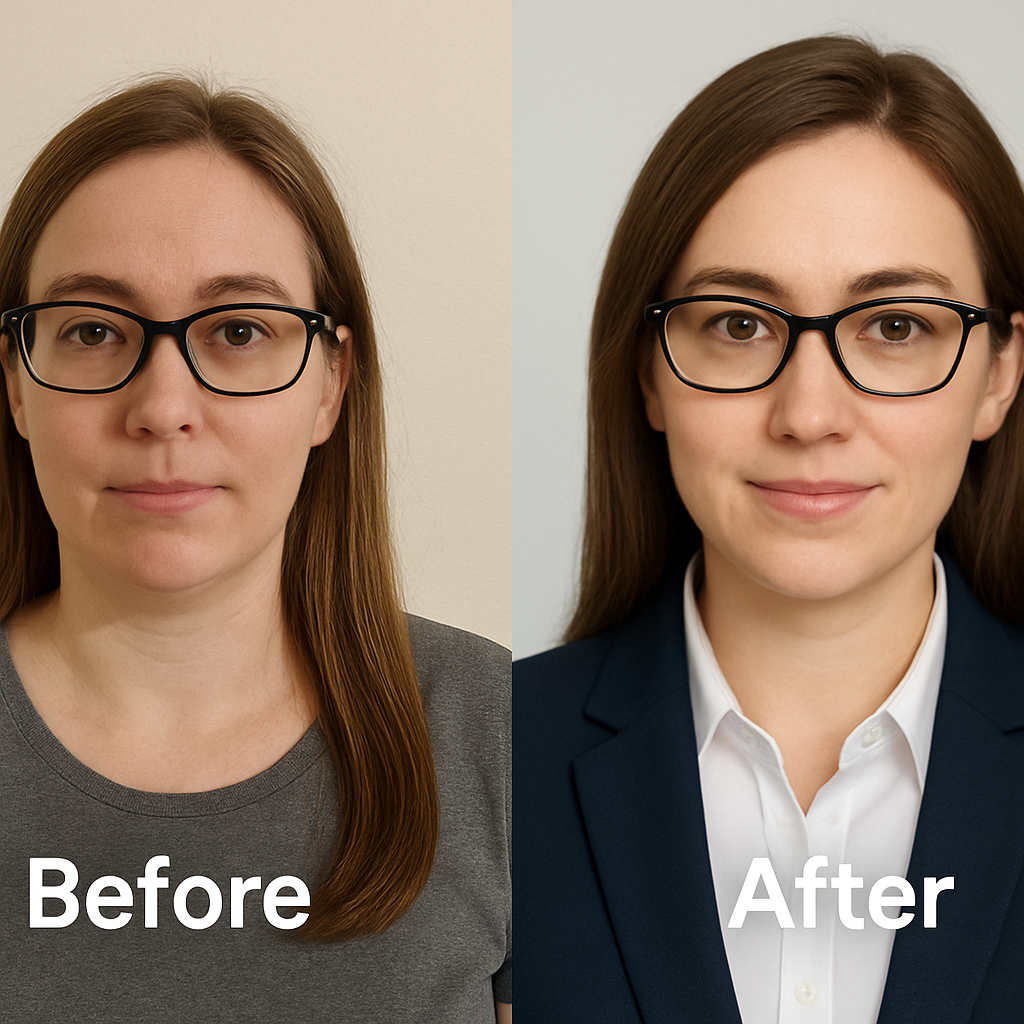
To compete in this environment, you need a modern "career tech stack" that includes more than just a LinkedIn login. This stack requires strategic positioning, content distribution, and high-fidelity visuals. Tools like NovaHeadshot have become essential components of this stack. By allowing you to generate studio-quality professional headshots in minutes, these platforms remove the friction of traditional photography, ensuring your first impression is scalable and immediate.
The good news is that you do not need millions of followers to build a defensible personal brand. You need clarity, consistency, and a system. Below are 5 actionable steps to build a personal brand that acts as a compounding asset for your career.
Step 1: Define Your Brand Foundation (The Positioning Loop)
Most professionals mistake "posting content" for "branding." They skip the strategy phase and go straight to tactics. This is a recipe for burnout. A strong personal brand starts with positioning. You must treat yourself like a product and define exactly where you fit in the market.
The Clarity Framework
Before you write a single post, you need to answer three specific questions. This is not about writing a generic mission statement. It is about defining your utility to the market.
- Who is the specific audience? Be granular. "Hiring managers" is too broad. "Series B Fintech VPs of Product" is actionable.
- What expensive problem do you solve? Do you reduce churn? Do you ship code faster? Do you turn complex data into executive insights?
- What is the specific outcome? What does the "after" state look like for the people you help?
Once you have these answers, you can construct a Personal Brand Positioning Sentence. This single sentence will act as the filter for every opportunity you accept and every piece of content you create.
"I help [specific audience] achieve [specific outcome] using [your key skills/approach]."
The Psychology of Aspiration
Positioning is not just about who you are today. It is about who you plan to be. Research on career psychology suggests that career achievement aspiration is the strongest predictor of engaging in personal branding. Professionals who view themselves as future leaders are significantly more likely to invest in defining their brand now.
This forward-looking approach allows you to bridge the gap between your current role and your next one. Data from 2026 shows that 40% of Gen Z professionals are actively repositioning their brands for career changes. By defining your niche clearly (e.g., "Cybersecurity Analyst specializing in cloud risk" rather than just "IT Pro"), you signal specialized value. This specificity decreases the cognitive load on recruiters and clients, making it easier for them to categorize you as the solution to their problem.
Step 2: Engineer Immediate Credibility (The Visual Gatekeeper)
Your visual identity is the gatekeeper of your personal brand. Before anyone reads your carefully crafted positioning statement, they process your visual signals. This happens faster than conscious thought.
The 100-Millisecond Rule
Princeton University research reveals that first impressions form in approximately 100 milliseconds based solely on facial appearance. In one-tenth of a second, viewers assess your likeability, competence, and trustworthiness. These "snap judgments" are highly correlated with deliberate judgments made after unlimited exposure. You do not get a second chance to fix this biological reaction.
On professional platforms, this visual bias translates directly to metrics. Profiles with professional headshots receive:
- 21x more profile views
- 36x more messages
- 9x more connection requests
Recruiters spend roughly 19% of their time on your profile looking exclusively at your photo. If that photo is a cropped wedding picture or a low-resolution selfie, you are signaling a lack of attention to detail.
Solving the "Visualization Gap" with AI
Historically, obtaining a high-quality headshot was a friction-heavy process. It involved booking a photographer, traveling to a studio, and paying significant fees. Market analysis shows that traditional professional photography averages $232.50 to $262.84 for a single session. This cost and time barrier often leads professionals to delay updating their image for years.
In 2026, AI has closed this gap. Tools like NovaHeadshot, alongside others in the ecosystem like Magic Hour and HeadshotPro, have democratized access to personal branding assets. Instead of weeks, you can now get results in minutes.
NovaHeadshot specifically focuses on photorealism and value, delivering professional-grade images that preserve natural skin texture and facial proportions. By using AI, you can bypass the logistical hurdles of a photoshoot while reaping the psychological benefits of the "halo effect," where a polished visual appearance subconsciously influences judgments about your work quality.
Optimizing Your Textual Signals
Once your visual hook is established, your text must convert that attention into interest. Your headline is your value proposition. It needs to be functional, not just descriptive.
Avoid: "Marketing Specialist at TechCorp." Adopt: "B2B Marketer | I help SaaS companies convert traffic into revenue."
Use the "Value-First" framework. Lead with the result. Case studies suggest that headline changes focusing on value delivery can increase connection acceptance rates by 34%.
Additionally, leverage the concept of Cognitive Fluency. This is the brain's preference for information that is easy to process. You achieve this through visual consistency. Use the same headshot across LinkedIn, X (formerly Twitter), your email signature, and your personal website. Keep your color palette and typography uniform. This repetition trains your network to recognize you instantly, reducing the friction required to trust you.
Step 3: Show Your Thinking in Public (The Content Loop)
You cannot build a brand in a vacuum. You build it by externalizing your knowledge. This does not mean you need to become a "content creator" in the influencer sense. It means you must consistently demonstrate your expertise where your industry peers congregate.
Platform Selection Strategy
Do not try to be everywhere. Diluting your focus ensures you will be ignored everywhere. In 2026, the platform hierarchy for professionals is clear:
- LinkedIn: The non-negotiable layer. 77-87% of recruiters use it as their primary search tool.
- X (Twitter): High-velocity engagement for tech, media, and finance.
- Niche Communities: GitHub, Dribbble, or specialized Slack/Discord groups.
Pick one core platform and master it before expanding.
The Content Mix Framework
To maintain consistency without burnout, rotate through four proven content archetypes. This framework ensures you are providing value rather than just noise.
- Teach: Share frameworks or "how-to" guides. (e.g., "3 questions I ask before scoping a project").
- Show: Provide evidence of work. Screenshots, charts, or before/after examples.
- Think: Share opinions or analysis of industry trends. (e.g., "Why the new privacy regulation will kill third-party data").
- Story: Share personal lessons or failures. (e.g., "The mistake that cost me a client and what I learned").
Mastering the Algorithm
Understanding the distribution mechanism is as important as the content itself. On LinkedIn, specific behaviors are rewarded:
- Video Dominance: Native video content generates 5x higher engagement than text-only posts.
- The Golden Hour: Strong engagement within the first 60 minutes of posting triggers broader distribution to 2nd and 3rd-degree connections.
- Dwell Time: Algorithms measure how long a user spends on your post. Long-form text or carousel PDFs that stop the scroll are prioritized over quick-consumption links.
Consistency is the variable you control. Posting 2-3 times per week is the optimal frequency for most industries. It is frequent enough to stay top-of-mind but rare enough to maintain quality.
Step 4: Engage Strategically (The Network Effect)
Most people view networking as a collection game. They try to accumulate the highest number of connections. This is a vanity metric. True network value comes from "network centrality"—your position within a web of relevant professionals.
The "Comment-First" Strategy
If you are just starting, you should spend 80% of your time commenting and only 20% of your time posting. Meaningful comments on high-visibility posts act as a "side door" to attention.
When you leave a thoughtful perspective on an industry leader's post, you borrow their distribution. Your comment appears to their audience. If your comment adds value (and your profile photo looks professional), curious users will click through to your profile. This is a high-leverage way to grow.
Avoid generic comments like "Great post!" Instead, use the "Yes, and..." approach: "I agree with your point on X. I have also found that Y is a critical factor when dealing with enterprise clients."
Relationship Conversion
Digital interaction is the start, not the end. You must move relationships from passive observation to active connection.
- The DM Strategy: LinkedIn messaging has an 18-25% response rate, which is significantly higher than cold email. However, you must earn the right to the inbox. Engage with a person's content 3-4 times before sending a connection request.
- The Ask: When you connect, personalize the note. Reference a specific piece of their content. "Hi Alex, I saw your breakdown of the Q3 fintech trends. The point about API consolidation really resonated with my work at [Company]. Would love to connect."
Research indicates that 85% of jobs are filled through networking. By building a network of advocates rather than just an audience of strangers, you create a safety net of opportunity that exists independently of your current employer.
Step 5: Align Your Brand With Opportunity (The Conversion)
A personal brand that does not lead to opportunity is just a hobby. You must create clear pathways for people to hire you, partner with you, or refer you.
Signal Availability
Ambiguity is the enemy of opportunity. You need to explicitly state what you are looking for.
- "Open to: Speaking engagements on AI ethics."
- "Seeking: Fractional CMO roles for Series A startups."
LinkedIn's "Open to Work" feature is a powerful lever here. You can control the visibility settings to be seen only by recruiters (private mode) or by everyone (public green frame). While some debate the optics of the public frame, data suggests that recruiters rely heavily on these signals to filter candidates who are actionable.
Create "Proof Assets"
When an opportunity knocks, you need to be ready to send materials immediately. Do not wait until you are asked to scramble for a portfolio. Create a "Proof Asset" library:
- A One-Pager: A PDF summary of your services or experience.
- Case Studies: A folder of 2-3 deep dives into past projects.
- Speaker Sheet: If you want to speak, have a one-sheet ready with your headshot, bio, and sample topics.
The Iteration Cycle
Your personal brand is a living system. It requires maintenance. A good rule of thumb is to refresh your visual assets every 2 years, or whenever you make a significant pivot in your career. If your headshot looks like you did five years ago, you are creating cognitive dissonance when you meet people in real life.
Regularly audit your "About" section. Does it reflect your current capabilities? Does it include the keywords that recruiters are searching for today? Personal branding is an iterative loop of define, build, measure, and refine.
Building Your Modern Career Toolkit
The era of the anonymous professional is over. In 2026, the market rewards those who can articulate their value and present it clearly. By defining your positioning, securing professional visuals, publishing strategic content, and engaging with your network, you transform your career from a series of job applications into an inbound engine of opportunities.
The most high-leverage step you can take today is to fix your visual foundation. It is the first thing people see and the hardest thing to fake.
If you are ready to upgrade your digital presence without the hassle of a studio shoot, NovaHeadshot offers the most efficient path forward. You can generate a portfolio of diverse, high-resolution professional images that align with your new brand strategy.
- Speed: Get results in minutes, not weeks.
- Cost: Save hundreds of dollars compared to traditional photography.
- Control: Choose from styles that match your specific industry tone.
Don't let a grainy photo be the reason a recruiter scrolls past your profile.
Explore NovaHeadshot's pricing and packages today to secure your competitive advantage and give your personal brand the professional finish it deserves.
Ready to Create Your Professional Headshots?
Transform your selfies into professional headshots in under 20 minutes. Join thousands of professionals who trust Nova Headshot for their AI-generated headshots.