AI Headshot FAQs: Your Top 5 Questions Answered for 2026
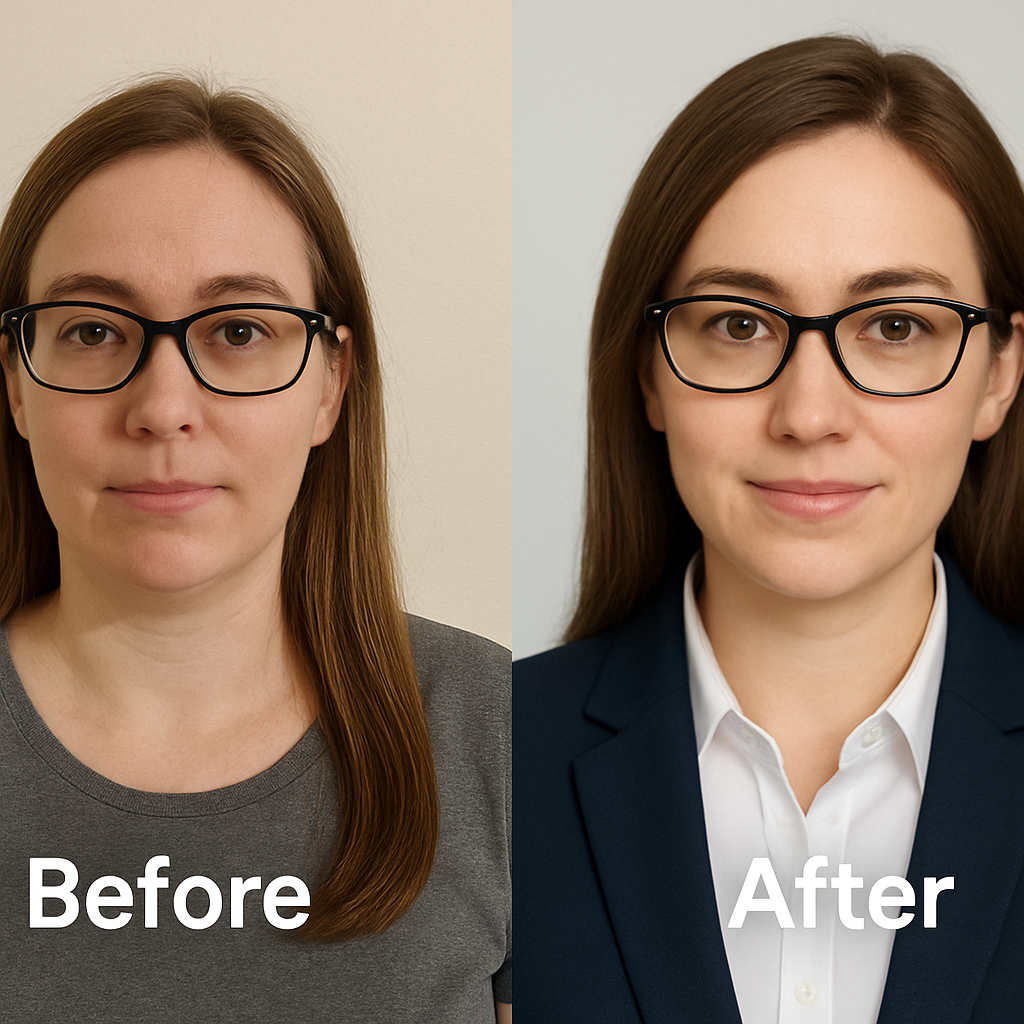
The modern professional identity stack has shifted fundamentally over the last three years. In 2026, your digital presence is no longer just a static résumé; it is a dynamic visual portfolio that serves as the primary trust anchor for recruiters, clients, and collaborators. Yet, a significant friction point remains in this stack: the professional headshot. Traditional photography is often high-friction, expensive, and logistically complex. This inefficiency has driven the rapid adoption of AI-powered solutions, transforming them from a niche curiosity into a core component of the modern career toolkit.
At NovaHeadshot, we observe this shift daily as thousands of professionals transition from outdated selfies to algorithmic portraiture. However, this transition naturally generates skepticism and questions regarding quality, ethics, and data security. You are likely evaluating whether this technology is a viable replacement for a studio session or merely a digital novelty. To make an informed decision, you need to understand the underlying mechanics, the market data on recruiter perception, and the ethical frameworks that govern responsible use.
This article deconstructs the five most critical questions surrounding AI headshots. We will explore the technology behind the results, analyze the data on professional acceptance, and explain how you can upgrade your professional image using NovaHeadshot's specialized platform. Whether you are refreshing a LinkedIn profile or standardizing team photos, this guide provides the strategic clarity required to navigate the landscape of synthetic media in 2026.
1. What exactly is an AI headshot—and how does NovaHeadshot work?
To understand the value proposition, we must first demystify the technology. An AI headshot is not a filter applied over an existing photo, nor is it a simple retouching job. It is a net-new image generated by a sophisticated neural network that understands the geometry of your face.
The underlying infrastructure of professional AI headshot systems, including NovaHeadshot, relies on diffusion models. As of 2026, advanced architectures like Flux 1.1 have become the standard for achieving photorealism. These models do not "copy and paste" your face. Instead, they operate through a process of iterative refinement. The system learns to remove noise from training images to understand high-fidelity details—skin texture, lighting falloff, and facial structure—and then reverses the process to construct a new image from random noise, guided by the specific features of your face.
The NovaHeadshot Process
We have streamlined this complex backend into a simple user workflow designed for efficiency:
- Input Data Acquisition: You upload a set of photos (selfies or existing portraits). The system requires visual data to train a lightweight, custom model specifically on your facial features.
- Facial Analysis and Training: Our AI analyzes your facial structure, proportions, and skin tone. It creates a mathematical representation of your likeness.
- Generative Synthesis: The model generates completely new studio-style portraits. It simulates professional lighting setups, diverse poses, and industry-appropriate attire.
- Refinement and Output: You download high-resolution images that are ready for immediate professional use.
This process differs fundamentally from generic text-to-image generators. While generic tools attempt to create faces from text descriptions, our platform utilizes a "custom model training approach." This ensures that the output is not just a generic professional but a highly accurate representation of you.
The result is a reduction in the "time-to-value" for professional branding. See how our platform works to deliver results in minutes rather than the weeks often required for scheduling, shooting, and retouching with a traditional photographer.
2. Do AI headshots actually look real and professional?
The primary barrier to adoption for most professionals is the fear of the "Uncanny Valley"—images that look almost human but possess subtle, disturbing flaws. In 2026, however, the data suggests that we have crossed a definitive quality threshold.
The Recruiter Perception Threshold
The most effective way to measure realism is not through subjective opinion but through blind testing with the gatekeepers of professional opportunity: recruiters. A recent study revealed a staggering statistic regarding visual fidelity. 73% of recruiters could not distinguish AI-generated headshots from professionally photographed images when presented side-by-side.
This metric indicates that modern AI headshots have achieved a level of visual authenticity that passes the practical standard for professional use. The "plastic" look associated with early generative models has been largely mitigated by advancements in texture rendering and lighting simulation.
Factors Influencing Realism
While the underlying models are powerful, the output quality follows the "garbage in, garbage out" principle. Realism is highly correlated with the quality of the input data you provide.
- Input Quality: Users who upload high-resolution, well-lit photos with clear facial visibility receive results that retain natural skin texture and accurate features.
- Model Tuning: NovaHeadshot is tuned specifically to avoid over-smoothing. We prioritize the retention of natural skin details, pores, and facial characteristics to ensure the image looks like a photograph, not a digital painting.
- Prompt Engineering: Our system handles the complex prompting required to generate industry-appropriate styles, from corporate formal to creative casual, ensuring the lighting and composition match professional standards.
The Reality of Detection
Interestingly, while human detection rates are low, confidence remains high. Research from Ringover found that while recruiters believed they could identify AI images with high accuracy, they were actually correct only 39.5% of the time. This disconnect suggests that for the vast majority of professional interactions—LinkedIn profiles, Slack avatars, and company directories—a high-quality AI headshot is functionally indistinguishable from traditional photography.
By using a dedicated tool like NovaHeadshot, you ensure you are on the right side of this quality curve. We invite you to view our pricing and see how accessible high-fidelity realism has become.
3. Is using an AI headshot ethical—or is it misleading?
As we integrate synthetic media into our professional lives, we must address the ethical dimension. The core tension lies between enhancement and misrepresentation.
The Authenticity Spectrum
Ethical usage of AI headshots operates on a spectrum. On one end, you have standard professional photography practices: lighting adjustments, blemish removal, and color correction. On the other end, you have deepfakes and fictional personas.
Used thoughtfully, an AI headshot is ethically sound for most professional contexts. The goal of a headshot is to provide a visual anchor for your professional identity. If the AI-generated image accurately reflects your current age, weight, and facial features, it serves the same function as a photo taken by a human photographer who uses flattering lighting and angles.
The "In-Person Recognition" Test
To navigate the ethics of AI headshots, we recommend a simple heuristic: The In-Person Recognition Test.
Would someone meeting you tomorrow for a coffee or a video interview easily recognize you from your profile photo?
If the answer is yes, you are on solid ethical ground. The image is a representation of you, optimized for professional presentation. If the answer is no—because the AI has significantly altered your bone structure, aged you down by a decade, or changed your ethnicity—then the image has crossed the line from enhancement to deception.
Industry Context Matters
Ethical norms also vary by industry.
- Creative & Tech: In fields like marketing, design, and software, utilizing AI tools signals digital literacy and adaptability.
- Conservative Fields: In law, finance, or medicine, where trust is the primary currency, authenticity is paramount. Here, it is critical to ensure your AI headshot is highly realistic.
NovaHeadshot is designed to keep you within the ethical bounds of professional representation. We focus on authentic, believable images. We aim to upgrade your image instantly, not to create a fictional character. For those in high-trust roles, using our tool to generate a polished but accurate image is a strategic way to maintain professionalism without the logistical overhead of a photoshoot.
4. What about privacy—what happens to my photos?
Privacy is a legitimate concern in the era of generative AI. The training of neural networks requires data, and users are right to ask how their biometric information is being handled. In 2026, the regulatory landscape has tightened with frameworks like the European Union AI Act, which mandates strict governance over biometric data.
The Data Monetization Trap
When evaluating AI tools, you must distinguish between "free" services and paid professional platforms. As the adage goes in tech: if the product is free, you are the product. Many free or ultra-low-cost generators monetize by aggregating user data to train larger, general-purpose models or by retaining rights to the generated imagery.
The NovaHeadshot Privacy Standard
NovaHeadshot operates on a direct-to-consumer, paid business model. This aligns our incentives with yours: we sell a service, not your data.
- Retention Policies: We implement strict data lifecycles. Once your custom model is trained and your images are generated, the training data does not need to persist indefinitely.
- Training Isolation: Your photos are used to train a model for you. We do not use your face to train a public model that others can access.
- User Control: You retain control over your generated headshots. We provide the ability to delete your uploads and results, ensuring you manage your digital footprint.
Comparatively, privacy-conscious platforms across the industry, such as InstaHeadshots, have set standards by implementing automatic deletion protocols where data is wiped after a set period (e.g., 30 days). We adhere to similar principles of data minimization.
For a deeper dive into how we protect your biometric data, you can review our privacy policy on our app signup page. Security is not a feature; it is a fundamental requirement of the professional infrastructure we are building.
5. Is NovaHeadshot worth paying for versus free AI tools?
The market for AI imagery is bifurcated. On one side are free, generic generators; on the other are specialized professional platforms. The decision on which to use comes down to the "Quality/Cost Trade-off" and the value you place on your professional brand.
The Hidden Costs of Free Tools
Free tools often utilize older model architectures or generic checkpoints that are not fine-tuned for photorealistic portraiture. The results frequently suffer from:
- Lower Realism: Issues with "plastic" skin texture and the "AI glow."
- Artifacts: Distorted backgrounds, mismatched eyes, or anatomical errors.
- Inconsistency: You might generate 100 images to find one usable one.
Furthermore, the lack of commercial rights and privacy protections makes free tools a risky proposition for business use.
The ROI of Professional AI
NovaHeadshot is engineered as a professional alternative. When you analyze the economics, the value proposition is clear:
- Cost Efficiency: Traditional professional photography in major metro areas in 2026 ranges from $295 to $450 for a standard session. NovaHeadshot packages start around $29. This represents a cost reduction of over 90%.
- Time Efficiency: A studio session requires travel, shooting, and a waiting period for proofs and retouching—often totaling weeks. NovaHeadshot delivers results in minutes.
- Volume and Variety: For a single price, you receive a wide array of backgrounds, outfits, and poses. This allows you to A/B test different looks across different platforms (e.g., a formal look for LinkedIn and a casual look for Twitter/X).
Data supports this shift in value perception. Surveys indicate that 38% of professionals adopt AI headshots specifically for convenience, followed closely by high-quality results. The market has validated that the small investment in a dedicated tool yields a disproportionately high return in professional presentation.
Building Your Modern Professional Toolkit
The landscape of career management has evolved. Just as you use software to optimize your workflow and communication, you must now leverage technology to optimize your professional presence. The data is definitive: 65% of job seekers are already incorporating AI tools into their application processes. The competitive standard has been raised.
You no longer have to choose between a grainy selfie and an expensive, time-consuming photoshoot. AI headshots occupy the strategic middle ground, offering speed, quality, and affordability. However, the tool you choose matters. To ensure ethical consistency, data privacy, and visual realism, you need a platform built for professionals.
NovaHeadshot provides that solution. We combine advanced diffusion technology with a user-centric workflow to deliver the essential visual assets you need to compete in 2026.
Don't let an outdated image hold back your career progression. Take control of your professional narrative today.
Ready to Create Your Professional Headshots?
Transform your selfies into professional headshots in under 20 minutes. Join thousands of professionals who trust Nova Headshot for their AI-generated headshots.